

This is an up-to-date list of key business trends in 2025, along with those that are poised to see continued growth in 2026.
We'll cover the sectors, consumer behavior changes, and tech innovations driving each trend.
1. Generative AI Boosts Business Productivity
Generative AI has businesses paying attention.

It’s predicted that generative AI holds about 30% of the entire AI market and is valued at roughly $60 billion.
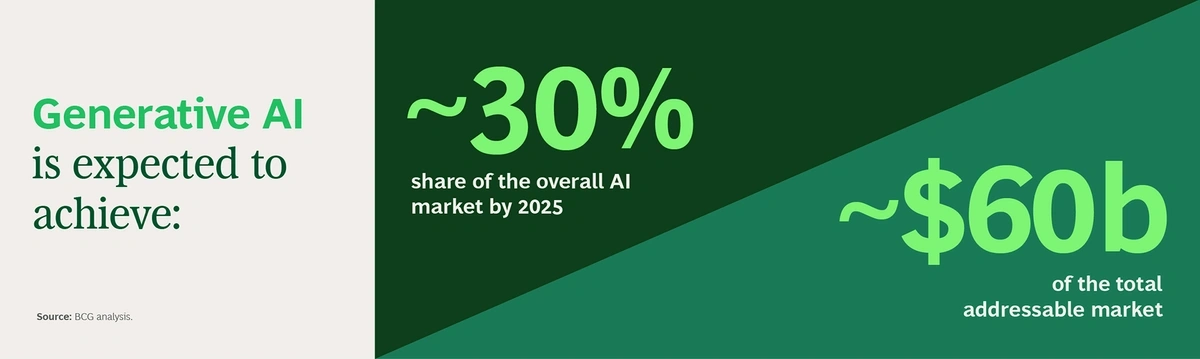
(The generative AI space is currently worth approximately $45 billion)
Consumers are expecting businesses to capitalize on generative AI applications — nearly 70% of consumers say they believe most businesses will soon be using this technology to improve the customer experience.
Generative AI platforms run on the technology of large language models (LLMs).
LLMs are trained on billions of pages of existing text. As they are trained, LLMs pay attention to contextual relationships between the words and patterns seen in sentences. From there, the LLM can generate content on its own.
2. E-Commerce Growth Persists Post-Pandemic
The pandemic completely changed the way consumers shop.
E-commerce was already on the rise before COVID-19 hit. But the pandemic helped the e-commerce space take off at an astronomical rate.
In fact, Shopify reported that e-commerce experienced 10 years’ worth of growth in just three months during the pandemic.

Although the growth of e-commerce has slowed post-pandemic, it’s still growing modestly. And businesses continue to adjust their marketing and sales strategies to maximize its impact on the bottom line.
In 2024, global e-commerce sales totaled $6.9 trillion, and that number is expected to grow to $8.1 trillion by 2026.
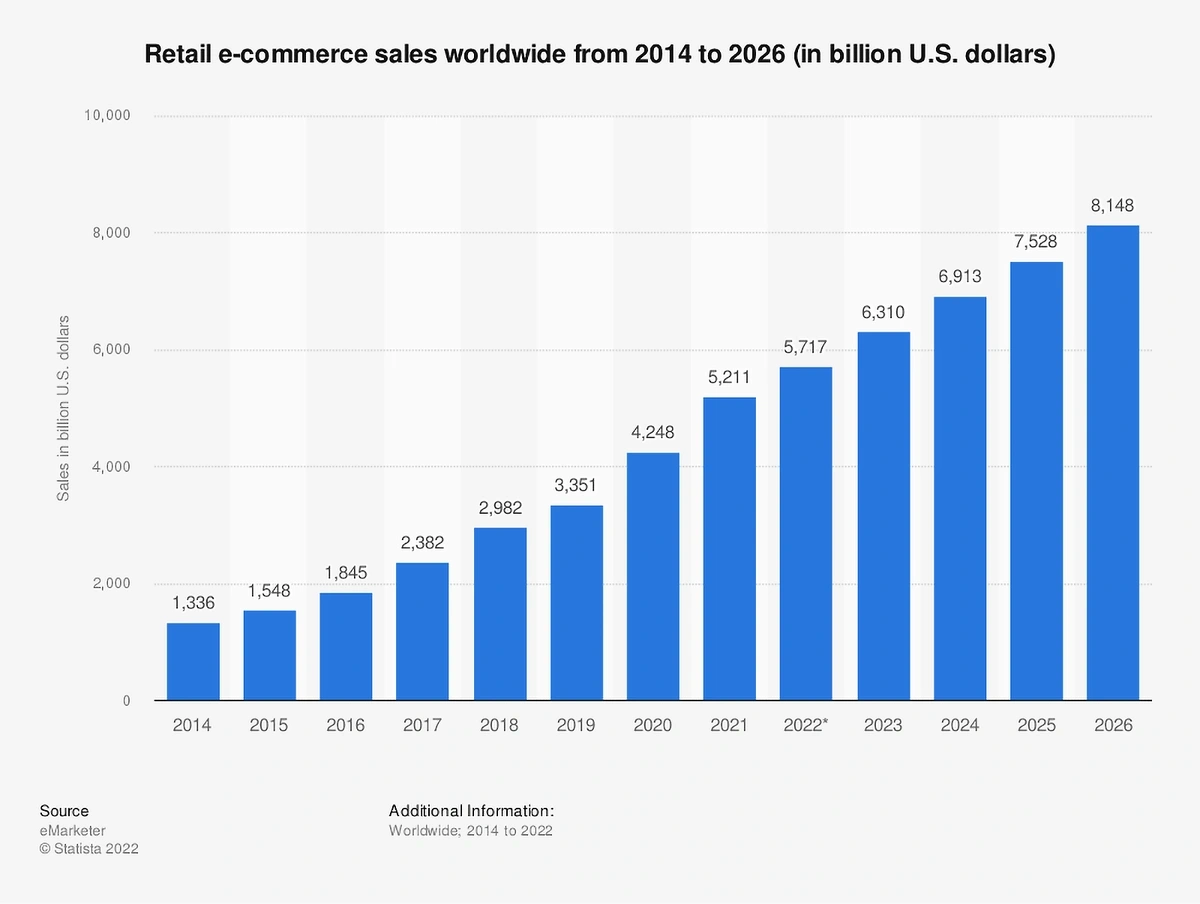
E-commerce was responsible for nearly 14% of all retail sales in 2019, but in 2023, e-commerce is expected to account for more than 22% of all retail.
Some specific retail categories, like electronics, home improvement, and home furnishings, have been able to maintain post-pandemic growth.
3. 5G Vastly Improves Data Collection And AI Capabilities
The development of the 5G mobile network has the potential to radically change business operations.

In simple terms, 5G can deliver higher data speeds, greater reliability, and sub-10ms latency.
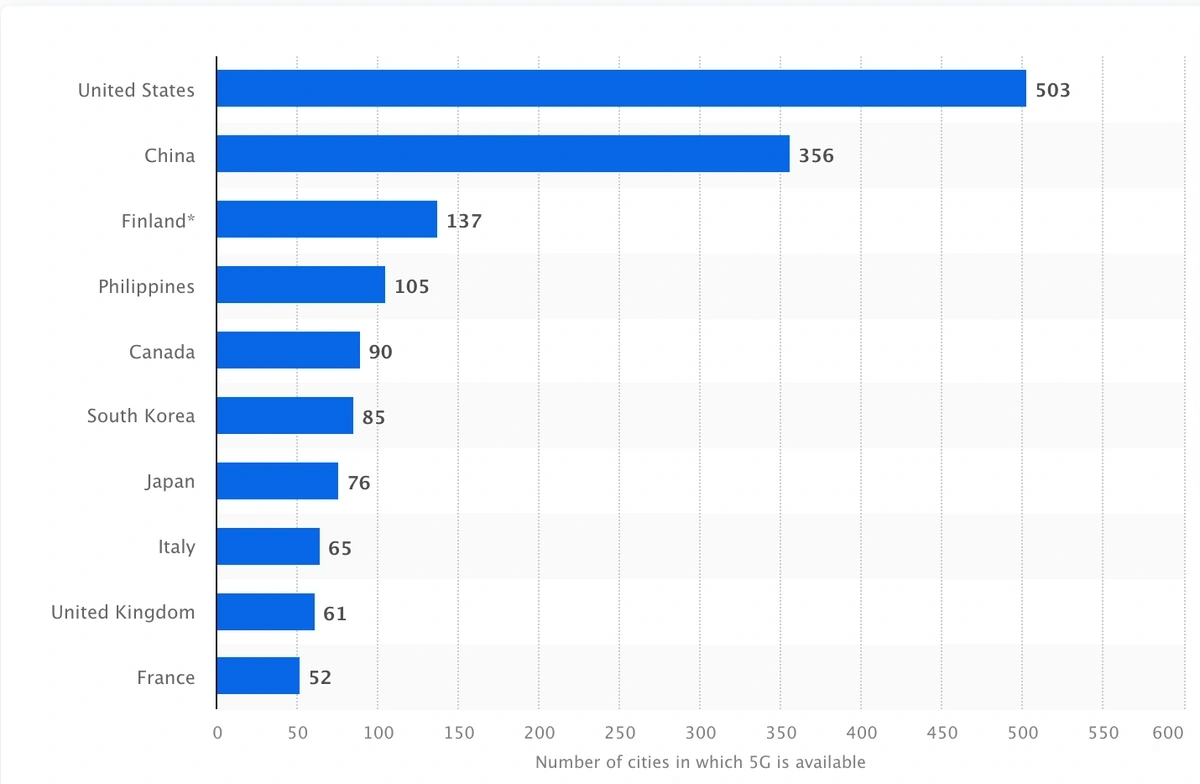
As of April 2023, the United States and China were leading the race for the 5G rollout.
In the US, 5G is available in 503 cities. It’s available in 356 cities in China.
The 5G market is expected to grow at a CAGR of 65.8% through 2030 to reach a valuation of $797.8 billion.
4. Employees Actively Seek Out Remote And Hybrid Work
At the height of the pandemic, 71% of Americans who had jobs that could be done from home were working exclusively from home.

In fact, the number of people working from home tripled between 2019 and 2021.
A 2022 Gallup survey showed 56% of full-time US employees have jobs that can be done from home. That amounts to 70 million workers.
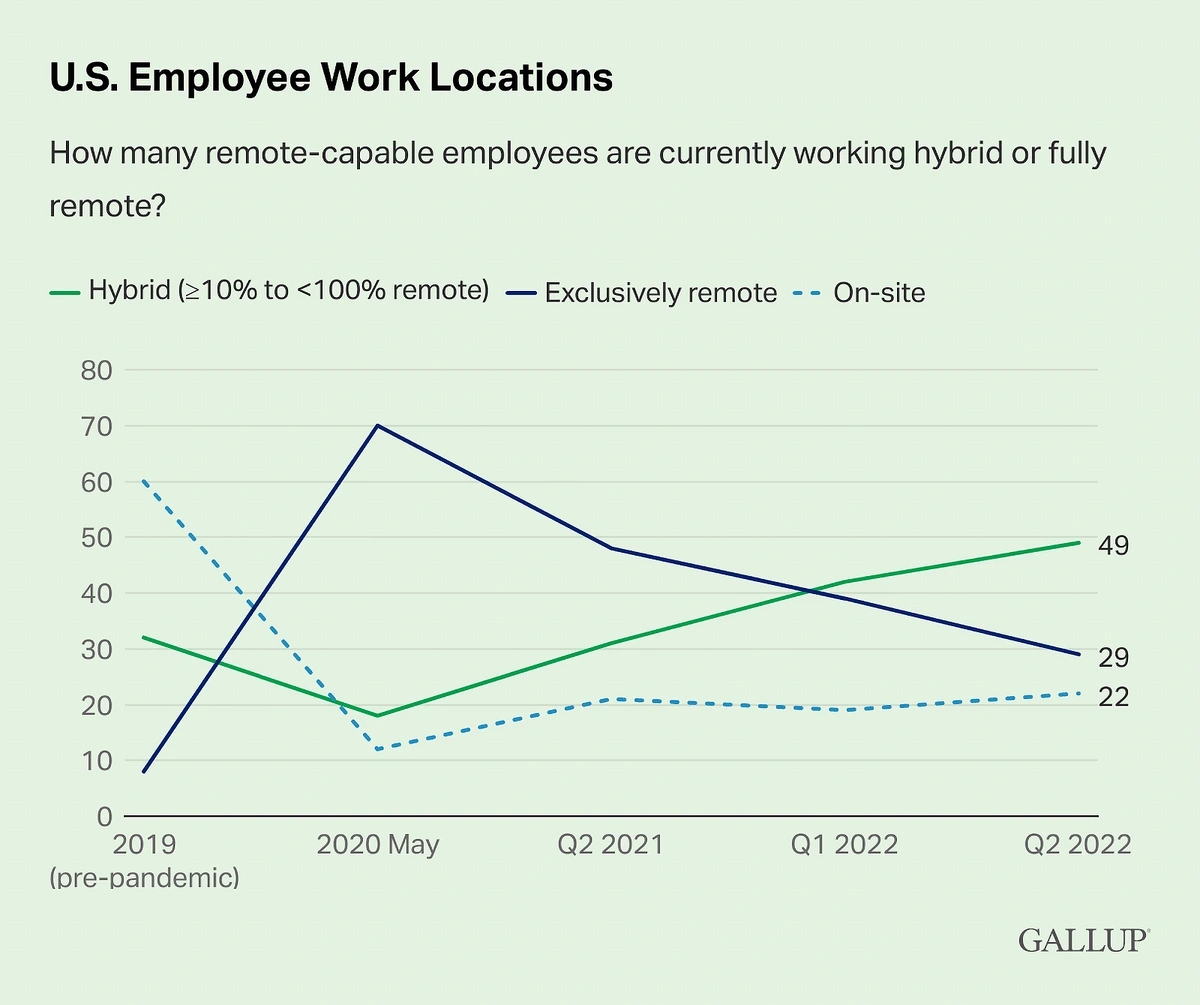
Of those workers, 50% have a hybrid work schedule, 30% work fully remotely, and 20% work fully in-office.

Young people with a college degree are the most likely to have access to remote and hybrid work environments.
Research shows that those with a bachelor’s degree or higher are five times more likely to work from home than those with less education.
This technology is crucial for businesses that are eager to offer new services and track insights in order to stay ahead of the competition.
For example, the development of the 5G mobile network is driving enhanced data collection and analysis for businesses.
5. Businesses Expand Ads, Communities, And Commerce On Social Media
Running a business without having a social media presence is almost unheard of in 2025.
The importance of social media in business marketing will likely continue to increase in 2026.

Estimates showed 5.24 billion users currently on social media as of January 2025, equating to 63.9% of the global population.
. Companies Focus On Sustainability
Research from IBM and the National Retail Federation shows that half of US consumers say they’re willing to pay more for sustainable products, and 62% of consumers are willing to change their shopping habits in order to reduce their environmental impact.
Globally, reports show that 85% of people have changed their purchasing habits to become more sustainable in the past five years.
Businesses are responding to this consumer demand by paying special attention to their ESG processes.
A 2022 survey found that nearly 80% of retailers who’ve dedicated resources to improving sustainability believe their efforts have resulted in increased customer loyalty.
However, a McKinsey survey found that the business results for the bottom line might not be quite that promising yet.
In their survey, only 22% of respondents reported achieving modest or significant value from their sustainability efforts in the past five years.
But businesses are optimistic about the future, the survey showed.
40% of respondents are expecting to see their efforts produce a modest or significant value in the next five years.



)
0 Comments