

This is a list of new technology trends for 2024 and 2025.
In this in-depth report, we’ll cover...
- AI
- Quantum computing
- Robotics
- Cybersecurity
...and lots more.
In addition to exploring the latest tech trends, we’ll also peek around the corner to see what's coming next in this space.
1. The Democratization Of AI
AI is by far the biggest trend in the tech space right now.
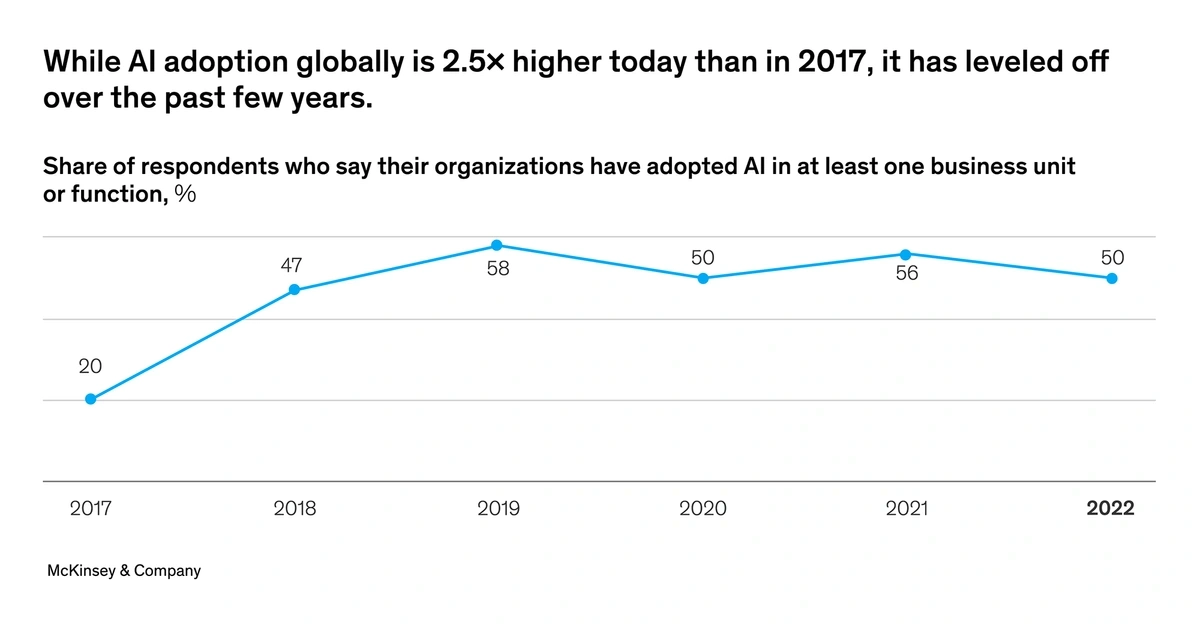
Adoption today is 2.5x higher than it was in 2017.
In fact, 50% of organizations have adopted AI for at least one business function.
Notably, AI is breaking into finance, healthcare, manufacturing, retail and dozens of other industries.
And, it’s not a technology reserved for large enterprises anymore.
With open-source AI solutions and lower cost and complexity of systems, the democratization of AI is in full swing.
The prime example is OpenAI, the AI non-profit/company behind ChatGPT.

It’s currently worth $80 billion.
And, the company expects to hit $1 billion in revenue in 2024.
OpenAI’s ChatGPT surprised the world when it was released in November 2022.
The chatbot’s ability to take natural-language prompts and generate conversational text for a wide variety of outcomes made people rethink what was possible with AI.
More than 100 million people used ChatGPT within the first two months of its release.
2. Innovation And Investment In Cleantech Grows
$200 billion was invested in Cleantech companies last year alone.
(That's up 70% YoY)
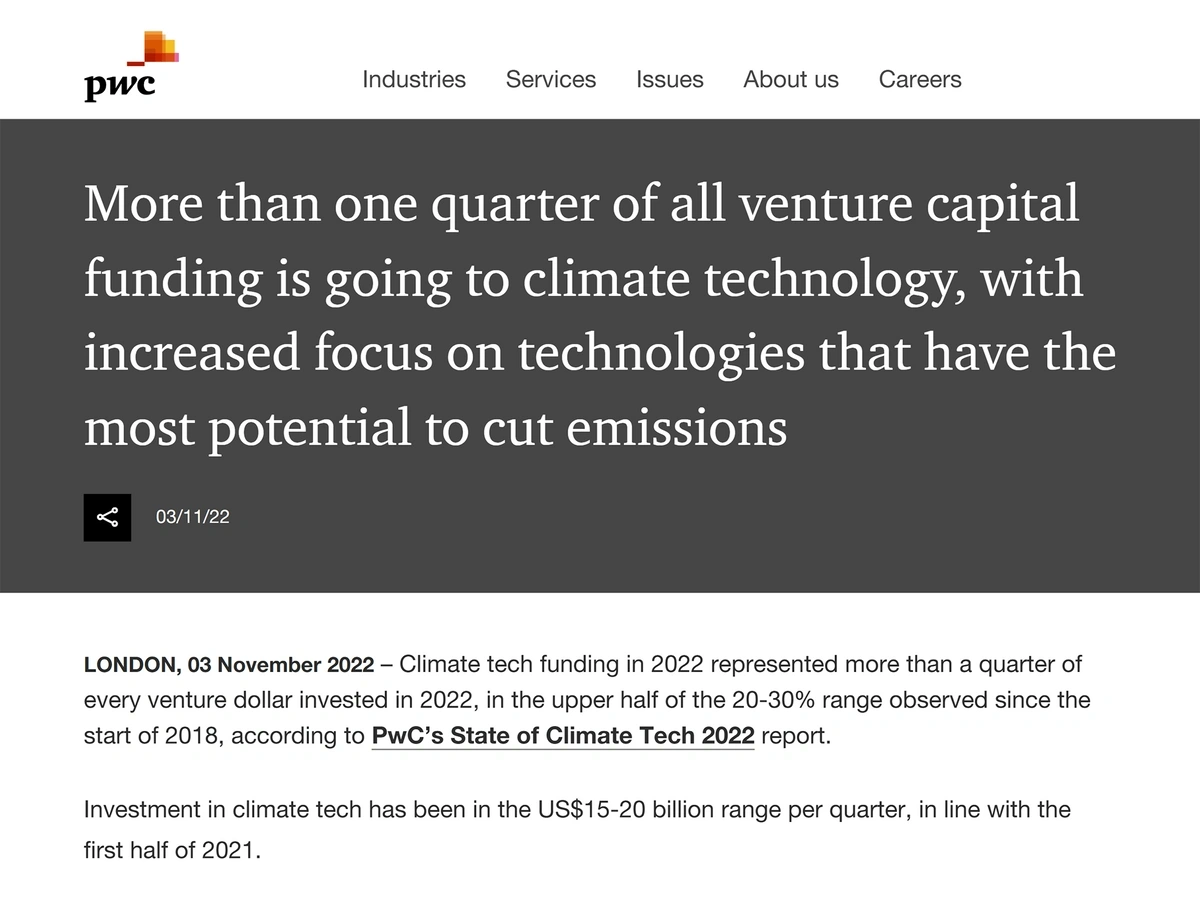
In fact, clean technology has gained so much momentum that more than 25% of all VC dollars now flow to cleantech companies.
Industry experts suggest that more funding and interest is on the way due, in part, to the Inflation Reduction Act.
The law includes loans, grants, and tax incentives aimed at encouraging the private sector to devote more dollars and time to cleantech.
The leader of Breakthrough Energy Ventures estimates this act will lead to the creation of between 300 and 1,000 new companies.
Many of these companies could be in the green hydrogen industry.
Hydrogen is the most abundant element on Earth and burning it doesn’t release CO2, giving it great potential as a source of green energy.
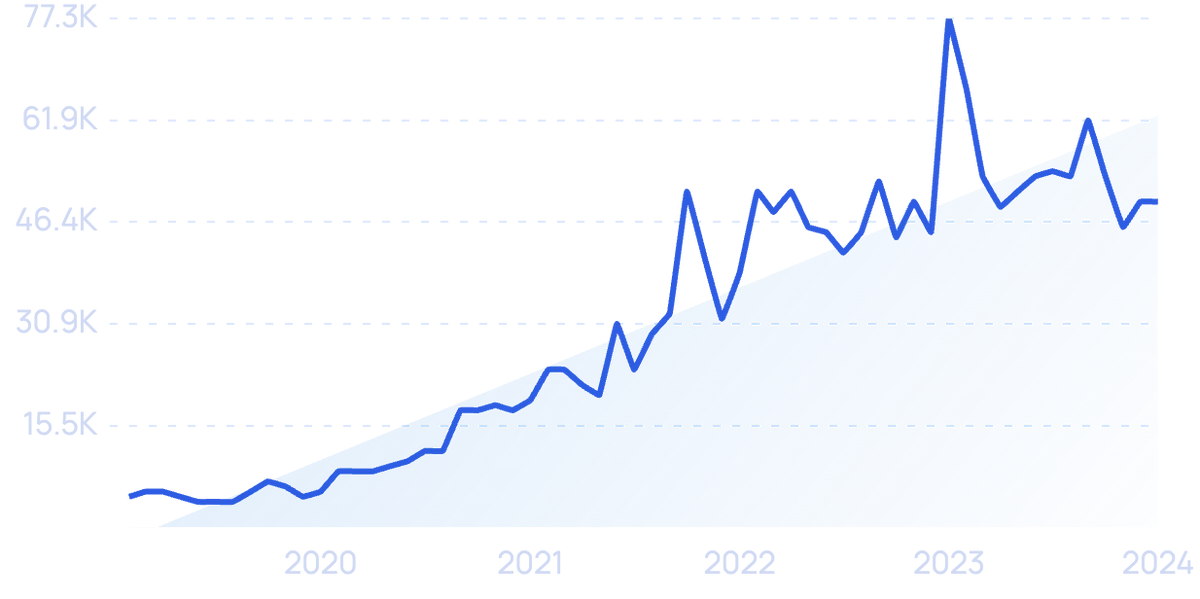
The green hydrogen market is expected to grow at a CAGR of 61% through 2027 and surpass $7 billion in value.
The Hydrogen Council estimates that around $700 billion in hydrogen-focused investments will be needed in order for the world to reach net-zero emissions by 2050.
They report that 680 large-scale hydrogen projects had been announced as of May 2022 — an increase of 160 projects compared to 2021.
3. Tech For Early Disease Detection Advances

New tech solutions are focused on identifying diseases earlier on.
This one innovation could help save countless lives.
For example, if ovarian cancer is caught while it’s still localized, the five-year survival rate is 93%.
A similar increase in life expectancy is seen for patients with melanoma. There’s a 99% five-year survival rate for localized cancer, but only a 32% survival rate after the cancer has spread.
4. Quantum Computing Moves Toward Real-World Application
Quantum computing has been a topic of discussion since the 1980s.
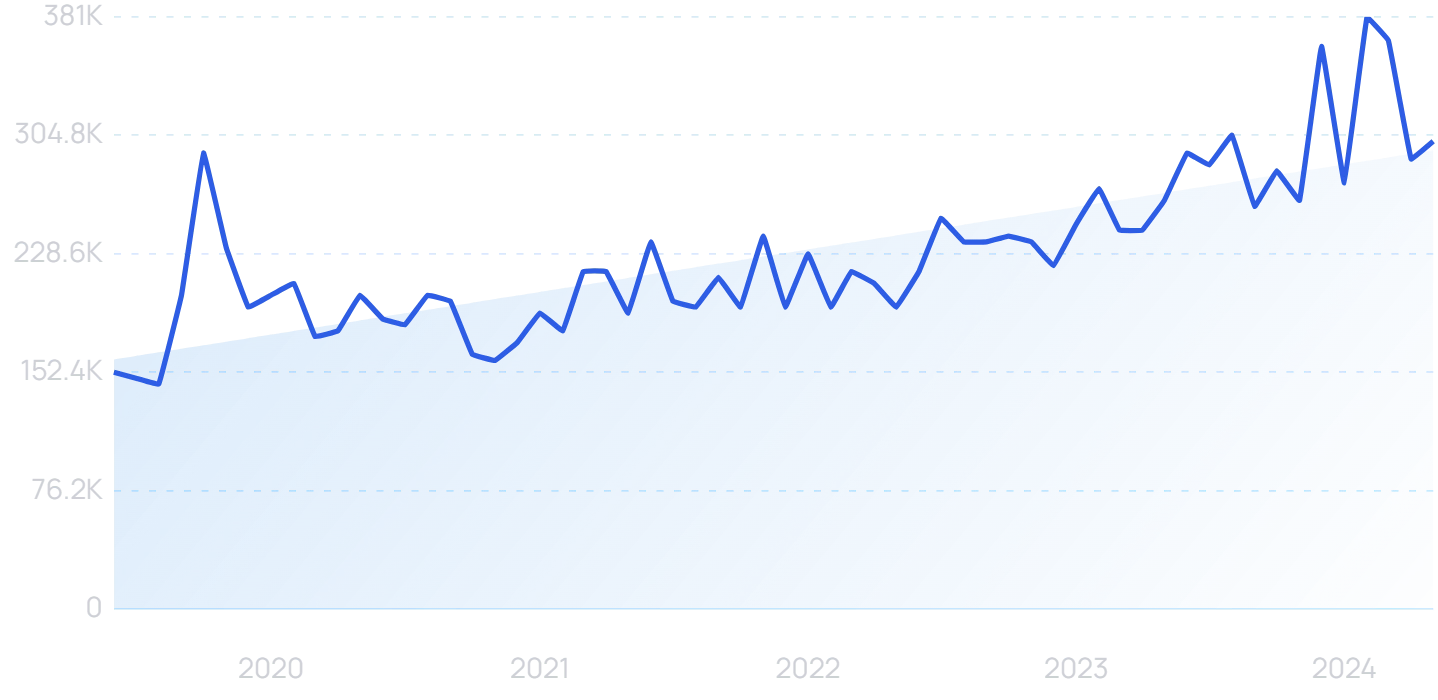
Fast forward to 2024 and the world is finally close to achieving real-world applications for this type of computing.
Traditional computers we know today operate on binary code (either 0 or 1). Quantum computers use qubits, which allows a piece of data to exist in two states at the same time (both 0 and 1).
All of this technology boils down to an increased speed of computation.
Complex calculations done by today’s computers might take millions of years, but they can be solved in minutes with quantum computing.
Technological and financial issues have plagued the industry, but momentum has been building in recent months.
In fact, $1.7B was invested in the quantum computing startups last year.
5. Cyber Threats Grow More Advanced
From attacks on random consumers to government-sponsored cyber warfare, cybercrime is a persistent and growing threat.
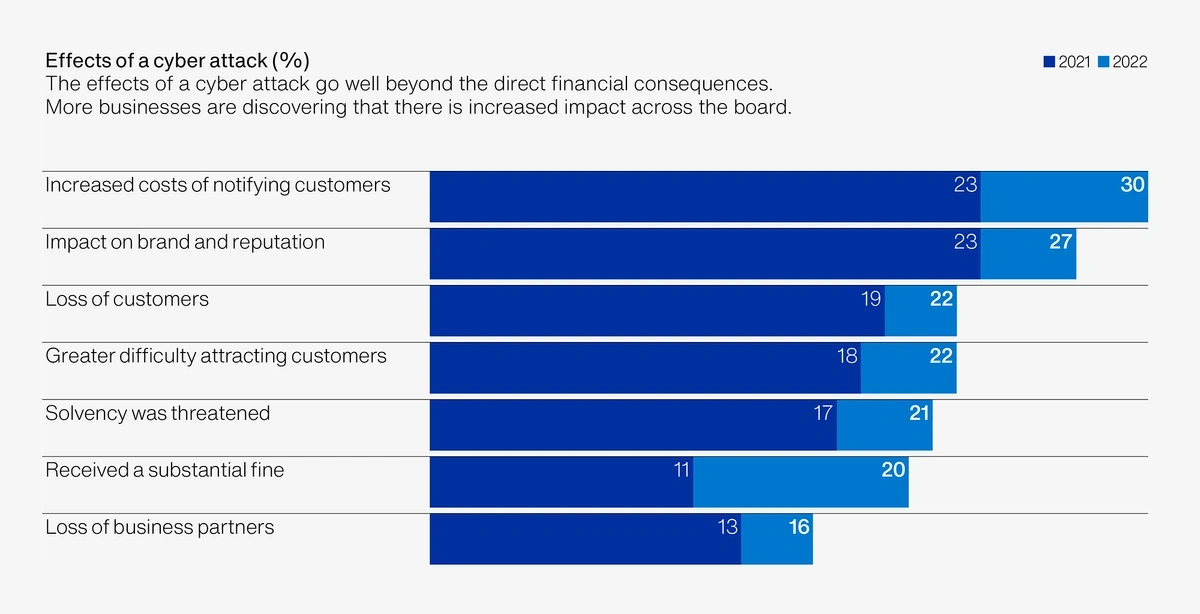
A 2022 global survey from Hiscox showed 43% of companies reported a cyber attack.
The most alarming statistic from that report was the fact that 20% of attacked organizations said the cost of the damage threatened their solvency.
Some predictions show that a single data breach was expected to cost an average of $5 million in 2023.
IBM’s research says it’s even higher: $9.44 million.
In fact, virtual crime has become so prevalent the $155 billion cybersecurity industry is expected to swell to $376 billion by 2029.
Deepfake attacks are one of the most sophisticated ways hackers are gaining access to businesses.
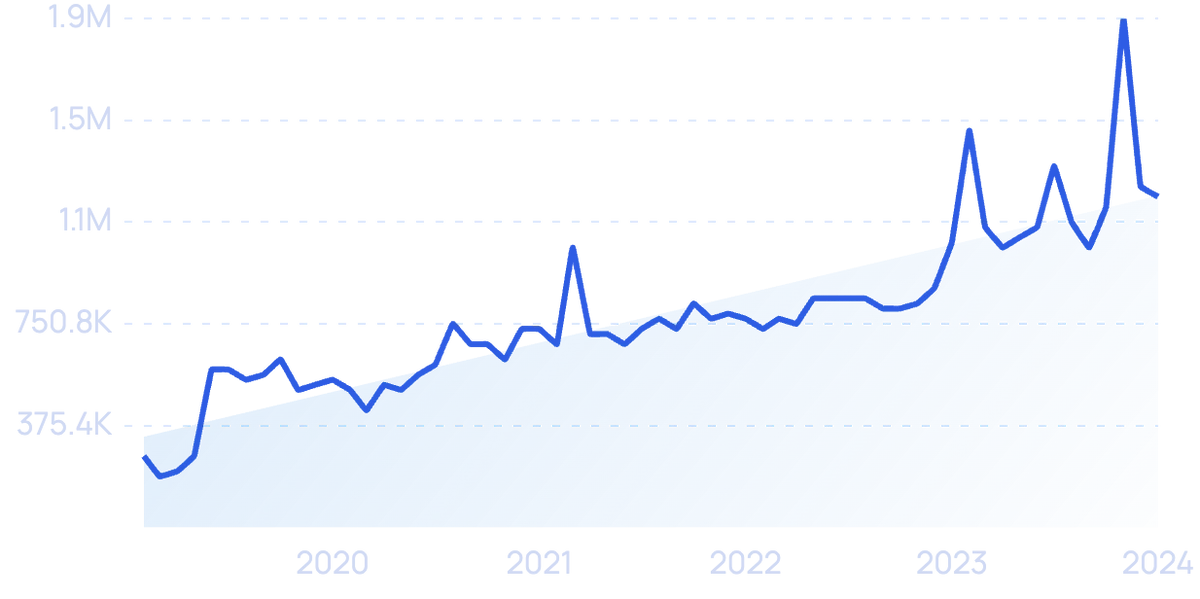
In a recent survey from VMware, 66% of participating IT leaders said they’d experienced a deepfake-related attack within the past 12 months. That’s an increase of 13% since 2021.
Deepfake technology utilizes AI/deep learning to create convincing videos, images, and audio of fake events and people.
The technology has been around for a few years, and it’s getting better and better for hackers.
A type of machine learning technology called generative adversarial networks is making the deepfake models nearly impossible to detect.
Plus, the emergence of 5G networks is making it easier to manipulate videos in real time.
Deepfakes are especially useful to cyber criminals who commit BEC (business email compromise) scams.
Manipulating face-to-face verification methods with deepfakes is another possibility for cyber criminals.
Identifying deepfakes and other incoming threats is very much a defensive game for organizations. Security professionals are always one step behind attackers.
However, cybersecurity pros are using AI and other advanced technology solutions in order to detect and stop attacks as early as possible.
6. Enterprise And Public Use Of IoT Expands
Despite ongoing chip shortages, the number of global IoT connections is expected to grow to 27 billion by 2025.
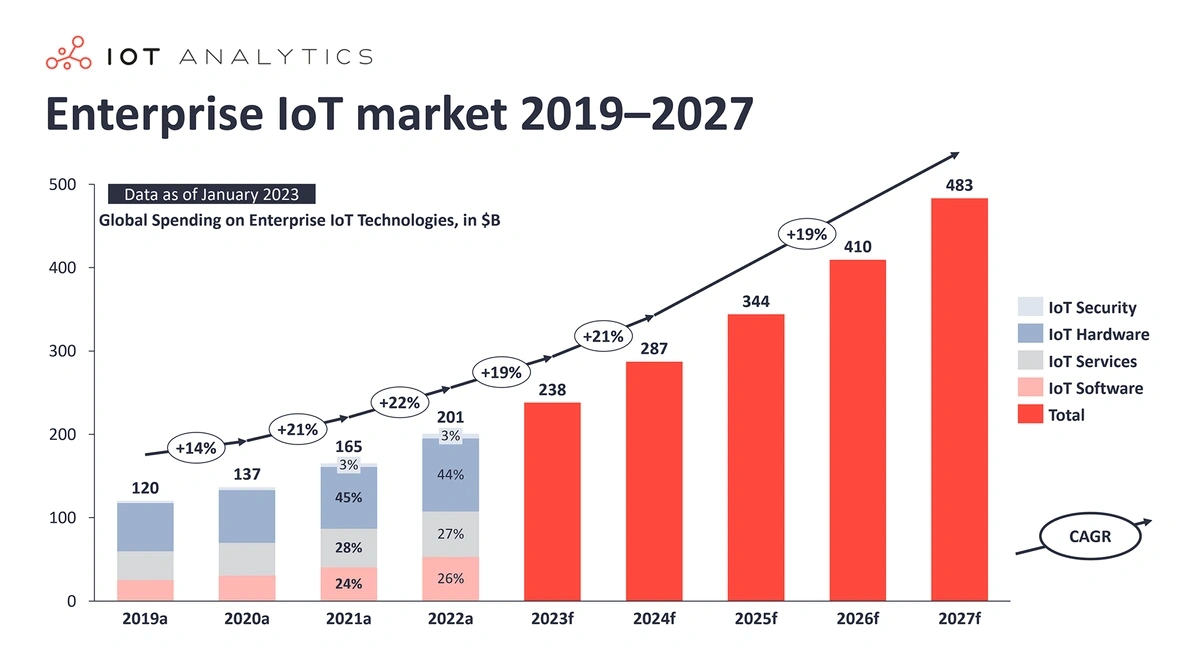
With the advancement of 5G networks and relief on the horizon for semiconductor manufacturing, some estimate the enterprise IoT market could grow to $483 billion by 2027.
Business leaders from a variety of industries are adopting and expanding their use of IoT technology in order to improve connectivity and data collection.
In a 2022 survey from IEEE, IoT was ranked as one of the top five most impactful technologies of 2023.
Businesses are seeing relatively quick ROI on their IoT projects. More than 60% say they’re reaching financial payback in just three years.
Manufacturing is one industry that’s investing in IoT (nicknamed the “industrial internet of things” or IIoT) as part of an effort to create smart factories.



0 Comments